

Temperature Instruments
“A Temperature Instrument is one that is used to measure physical quantities. We Are One Of India’s Leading Measuring Instrument Manufacturers, Suppliers, Dealers, Distributors, And Traders.”
We are a globally recognized ISO 9001:2008 manufacturer of Temperature sensors and Temperature Instruments & Devices in Ahmedabad. We further produce and distribute a multiplicity of RTD, Thermocouples, Pt-100 Temperature sensors, thermowells, pressure transmitters, Cables, and accessories as well. We make temperature sensors diverse & flexible to satisfy your entire requirement for Industries.
Our team of experienced engineers will work to fully understand your needs and apply our high standards of quality engineering and make to your customized solution. Our Temperature sensors is highly supplied in both standard and custom design which can be found in process application like the metal industry, pharmaceutical, Textile, sanitary, cement industry, chemical industry, etc. Having a fine reputation to built high-quality products, quick standard lead time, and exceptional customer support.
What is a Temperature Instrument?
Temperature is associated with the kinetic energy of the molecules which is a measure of the quality of heat. The physical parameter that is regularly measured in Industry, Science and Commerce is temperature. The device that offers the shortest part of the procedure of gauging a current local temperature towards its instant or later estimation is temperature gauging instruments. Types of temperature element instrumentation are numerous and they have a massive application in the measurement of the temperature of a process substance. There is also this which is categorized under mechanical and electronic temperature elements.
Another range of sensor can be used to measure the temperature. Each of them presupposes that the temperature is sensed by some change in any physical property. Measurement sets are comprised of common and regular measurements that could be utilized to assess temperature patterns.
There are different variants of measurement instrument used for the temperature measure such as Liquid in glass thermometer (LIG), Thermocouples (TCs), Thermistors, Resistance Temperature Detectors (RTDs), Platinum Resistance Thermometers (PRTs) and Standard Platinum Resistance Thermometers (SPRTs).
Why Temperature Instrument Is Needed To Various Industries
The temperature measurement of the contemporary industrial setting is an extremely diverse set of requirements and usage. There are various types of measuring instrument like Thermometer, Thermowells, various types of sensor like Pt-100 Temperature Sensor, Platinum Rtd Sensor, Thermocouples Sensor etc.
Another factor that stands out against the rest of the most generically estimated factors in contemporary industrial processing is temperature, which is often a fundamental and crucial parameter in manufacturing.
It is widely utilized for warm treatment, ignition, drying, Calcination, alignment, materials testing and expulsion among others in a variety of industries including Oil & Gas, Chemical, Textile, Pharmaceutical, Power, Cement, Metal and more.
It is believed that one of the temperature measuring instruments such as RTD (Resistance Temperature Detectors) is one of the most precise temperature sensor instrument available. In addition,
we are manufacture industrial temperature sensor in very good accuracy; they give incredible strength, high resistance to electrical noise. That means sensor are good appropriate for application in process and industrial automation environments particularly around engines, generators and other high voltage equipment. There are various temperature instruments we serve.
Temperature Instrument Product we serve
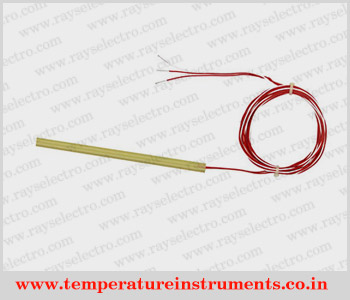
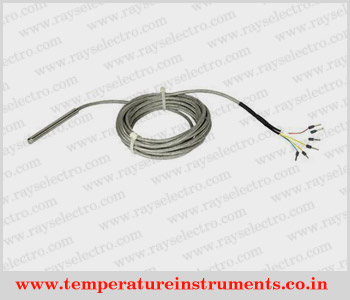
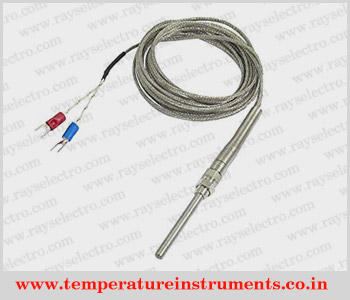
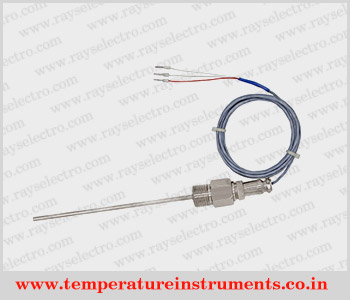
Raystek Process Instruments LLP is an Indian manufacturer of Industrial Temperature Sensors such as Thermocouples, Platinum Resistance Thermometers (or RTDs and Pt100) and Thermistor sensors.
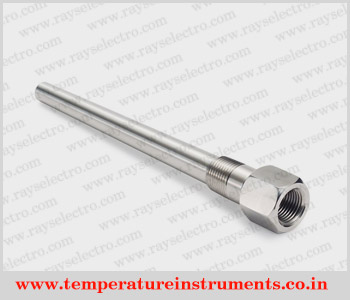
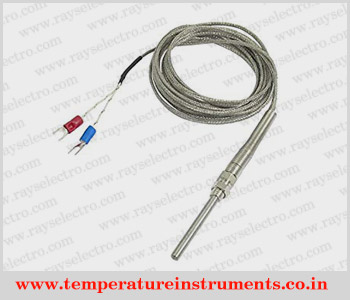
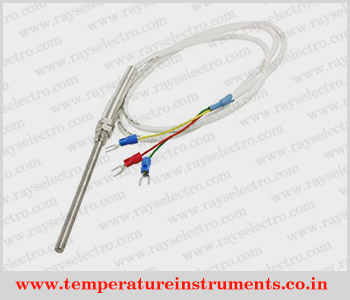
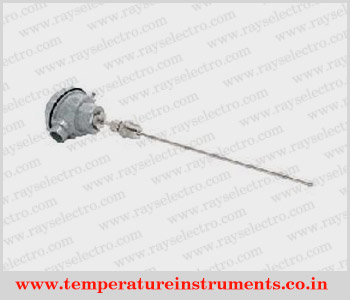
Temperature Instruments price in India
We also have on offer a wide range of Temperature Instruments to our distinguished clients. The brand name of Rays Elector is well in the market to offer the temperature instruments whose price in India is very low. These instruments are made, employing latest technology and methodology, in corroboration to the worldwide industrial quality standard. Furthermore the offered products are quality accepted product ranges which are in harmony to favored specifications. Moreover, the processed products are acquired among competent and apt suppliers of the market.
Working principle of Temperature Instruments
The average kinetic energy of the particles and the device used to measure the object is known as temperature. When the hot objects are placed in contact with the cold one, then there is the transfer of thermal energy from one place to another. When both the objects reach the same temperature, the transfer of energy stops because the average per particle is the same in both.
The mean kinetic energy of the objects and the instrument that measures the object is what is referred to as temperature. When the warm bodies are contacted with the cold body, then we experience the exchange of heat energy between two positions. At the same temperature of both the objects, energy transfer ceases, since the average per particle is equal in both.
Three effects, which were discovered by Seebeck, Peltier and Thomson, form the working principle of Temperature Instruments. Once two different or unlike metals are brought together at two points, an electromotive force (emf) occurs at the two points. Various combinations of metals have different amounts of emf generated.
The second effect is the effect that occurs when a two dissimilar metals are brought together to produce two junctions and an emf is produced in the circuit because of the difference in temperature of the two junction of the circuit.
The third impact is the case when two dissimilar metals are joined together to form two junctions, the potential is existing in the circuit by the temperature difference that occurred in the entire length of conductors in the circuit.